Robert F. (Terry) Bergeron, Jr.
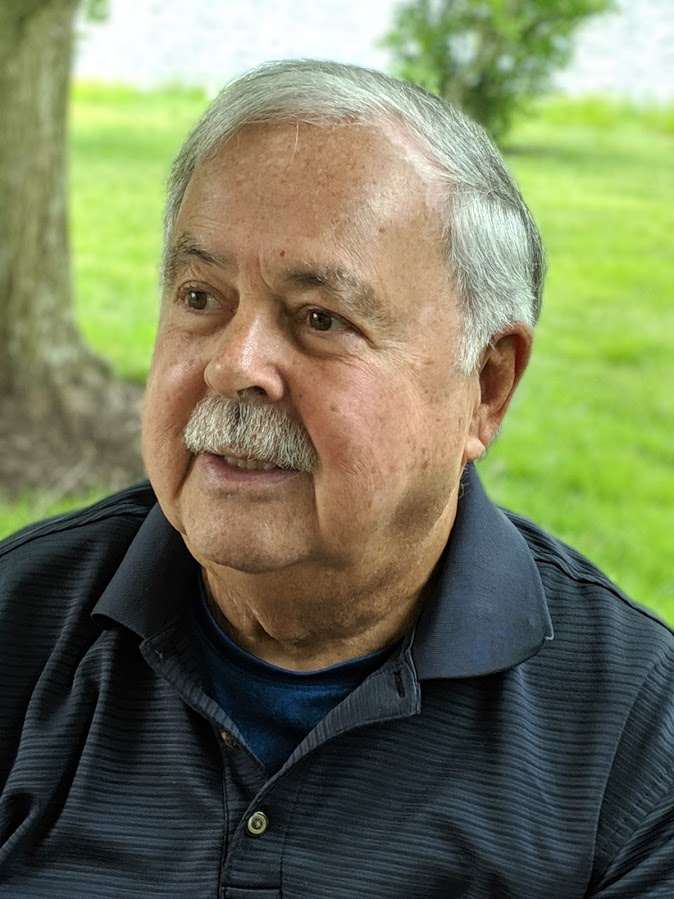
Dr. Robert “Terry” Bergeron became involved in his profession because of his upbringing and his family history. He grew up in a Navy family that believed in service and striving. In addition, his passion for mathematics was fostered by one of his teachers in high school, who put in the extra effort to teach him the beauty in the subject and the rewards of learning. From then on, Dr. Bergeron’s life and career included teaching, exploring and developing mathematical concepts and applications.
Dr. Bergeron continued his academic pursuits after high school at Brown University, earning an ScB, summa cum laude, in 1964. He was president and valedictorian of his college class. He continued at the Massachusetts Institute of Technology and received a PhD in applied mathematics in 1968, with a thesis on the instability of parallel shear flows. He spent his first year working as a research associate for Bolt Beranek & Newman, and the year after that instructing mathematics courses at MIT. In 1969, he started at Bell Laboratories as a member of the technical staff, researching in re-entry physics. In 1972, he was promoted to the role of supervisor. In 1977, he became a Visiting Scientist at the MIT Laboratory for Computer Science. He returned the following year to become Technical Manager at Bell Laboratories. He remained in this position until 1995, developing computer systems and telecommunications systems. From 1996 to 2000, he provided his skills and expertise as a consultant and senior manager for Cotelligent. Since 2001, he has remained active as a consultant within the industry.
While at MIT, Dr. Bergeron was present at the creation of the internet and object-oriented programming. While at Bell Laboratories, he was involved with the initial development of Geographic Data applications, which paved the way for Mapquest and Google Maps. His achievements also include developing UNIX-based operations support systems and an interactive television product using early touch-screen technology for Bell Laboratories. He holds the patent for a large computer-controlled robotic switching system providing the mainframe function for telephone offices. He has contributed numerous articles to professional journals in acoustics, computer science, and re-entry physics.
Who's Who Publications
Who’s Who In Finance and Business – 2004-2005, 34th Edition (pub. 2004)
Who’s Who in America – 2006, 60th Edition (pub. 2005)
Who’s Who in America – 2005, 59th Edition (pub. 2004)
Who’s Who in America – 2004, 58th Edition (pub. 2003)
Who’s Who in America – 2003, 57th Edition (pub. 2002)
Who’s Who in America – 2002, 56th Edition (pub. 2001)
Who’s Who in America – 2001, 55th Edition (pub. 2000)
Who’s Who in America – 2000, 54th Edition (pub. 1999)
Who’s Who in America – 1999, 53rd Edition (pub. 1998)
Who’s Who in America – 1998, 52nd Edition (pub. 1997)
Who’s Who in Science and Engineering – 2005-2006, 8th Edition (pub. 2004)
Who’s Who in Science and Engineering – 2003-2004, 7th Edition (pub. 2003)
Who’s Who in Science and Engineering – 2002-2003, 6th Edition (pub. 2001)
Who’s Who in Science and Engineering – 2000-2001, 5th Edition (pub. 1999)
Who’s Who in Science and Engineering – 1998-1999, 4th Edition (pub. 1997)
Who’s Who in the East – 2001, 28th Edition (pub. 2000)
Who’s Who in the East – 1999-2000, 27th Edition (pub. 1998)
Who’s Who in the East – 1997-1998, 26th Edition (pub. 1996)
Who’s Who in the World – 2006, 23rd Edition (pub. 2005)
Who’s Who in the World – 2005, 22nd Edition (pub. 2004)
Who’s Who in the World – 2004, 21st Edition (pub. 2003)
Who’s Who in the World – 2003, 20th Edition (pub. 2002)
Who’s Who in the World – 2002, 19th Edition (pub. 2001)
Who’s Who in the World – 2001, 18th Edition (pub. 2000)
Who’s Who in the World – 2000, 17th Edition (pub. 1999)
Who’s Who in the World – 1999, 16th Edition (pub. 1998)
Who’s Who in the World – 1998, 15th Edition (pub. 1997)

Get in touch
Copyright ©
Site powered by Who’s Who Publishers